Operating Context and the Problem
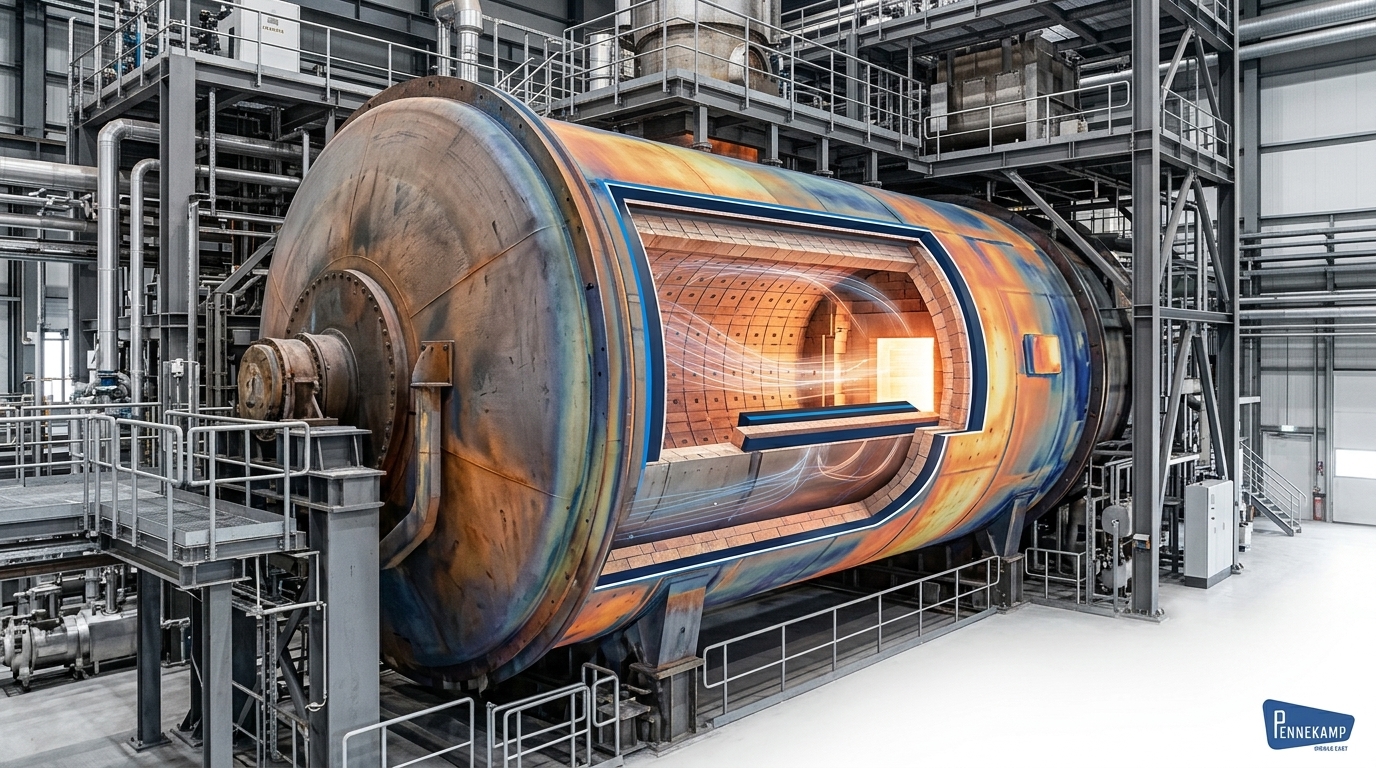
A metallurgical furnace operating at high temperature reported rising energy consumption and increasing frequency of localized hot spots on the shell. Operators also experienced temperature control instability, requiring frequent adjustments to maintain process targets. Maintenance records showed that lining repairs were becoming more frequent, suggesting that thermal gradients and infiltration were accelerating degradation.
The plant needed two outcomes at once: better efficiency and lower asset risk.
Diagnosis: Unbalanced Heat Flow and Localized Thermal Gradients
Thermal inspection identified zones where heat flux was higher than design expectation. These were linked to lining thinning and increased permeability—likely from microcracking and infiltration. In other zones, insulation performance drifted over time due to damage and repairs with inconsistent thermal properties.
The result was uneven heat transfer: localized hot spots increased shell stress, while broader heat loss increased energy demand. The furnace’s thermal behavior became less predictable as the lining condition drifted.
Refractory Optimization Strategy
The solution combined zone-based hot-face upgrades with improved backup insulation control. In high-wear hot-face zones, materials were selected to reduce permeability and resist infiltration, stabilizing thermal properties over time. In shell-protection zones, insulation layers were redesigned to reduce heat loss and smooth thermal gradients without creating excessive thermal stress at interfaces.
Installation and repair practices were standardized to reduce variability. Repair materials were aligned to the thermal properties of the original lining so that patchwork didn’t create a mosaic of different conductivities.
Results: Lower Risk, Better Efficiency, More Predictable Operation
After implementation, shell temperature trends stabilized and hot spots reduced in frequency and severity. Operators reported more stable thermal control, requiring fewer corrective adjustments. Energy consumption improved because the lining retained heat more consistently, and fewer emergency repairs reduced restart-related energy penalties.
The most valuable improvement was predictability. Heat transfer behavior remained closer to design across the campaign, enabling better planning and more stable production rhythm.
What This Shows About Heat Transfer and Refractories
Optimizing heat transfer is not only about “more insulation.” It’s about maintaining stable thermal properties over time, preventing infiltration-driven drift, and smoothing gradients that create stress and hot spots. Refractory selection and maintenance discipline must work together to achieve this.
If your furnace is showing rising shell temperatures, drifting energy use, or unstable thermal control, contact Pennekamp Middle East with your furnace profile and thermal data. We can recommend refractory raw materials and finished products designed to stabilize heat transfer, protect assets, and improve efficiency without compromising reliability.