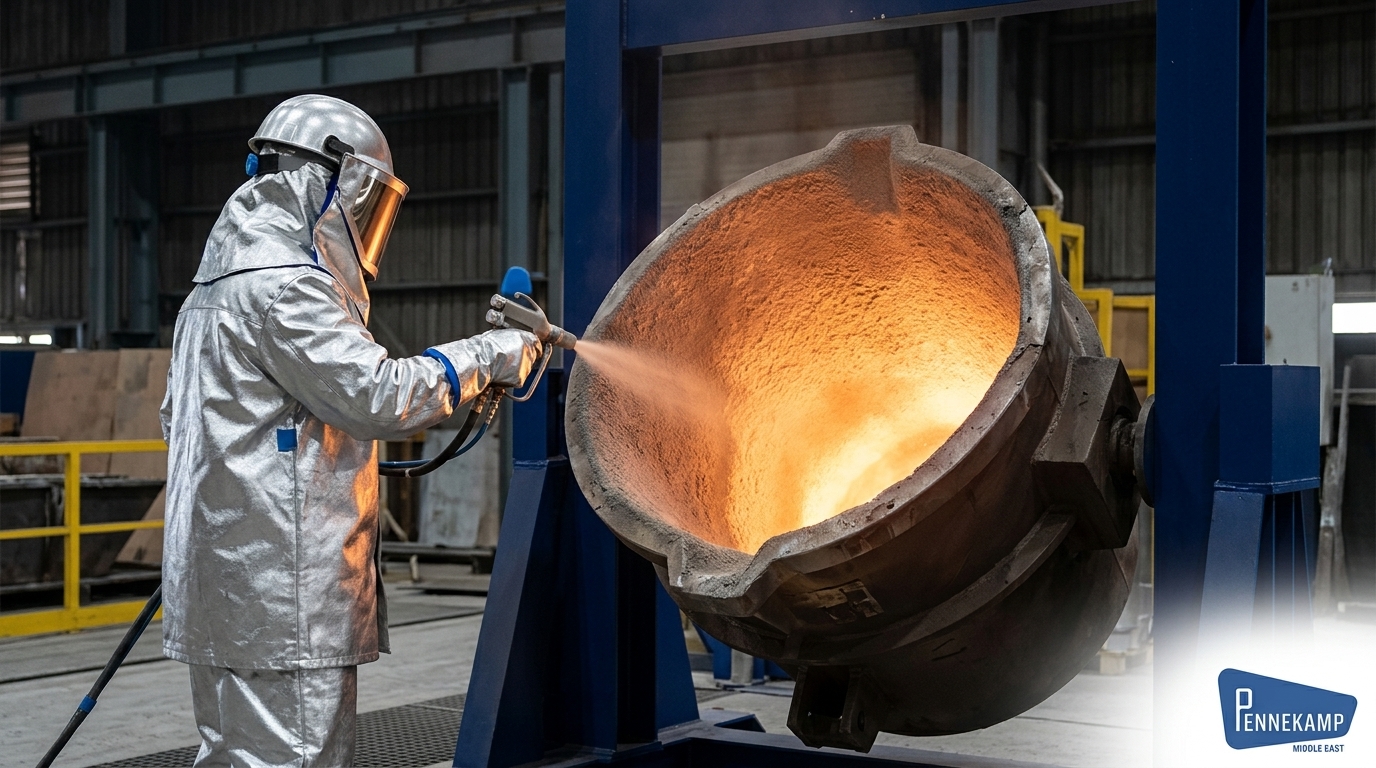
Why Charge Ladles Benefit from Hot Spray Repairs
Unlike steady-state vessels, charge ladles often experience repeated heating and cooling. That cycling drives spalling, especially around the lip, slag line, and impact areas. Mechanical handling adds stress, and slag carryover can accelerate corrosion. If profile loss is not corrected early, localized wear becomes structural risk—forcing unplanned downtime or premature relining.
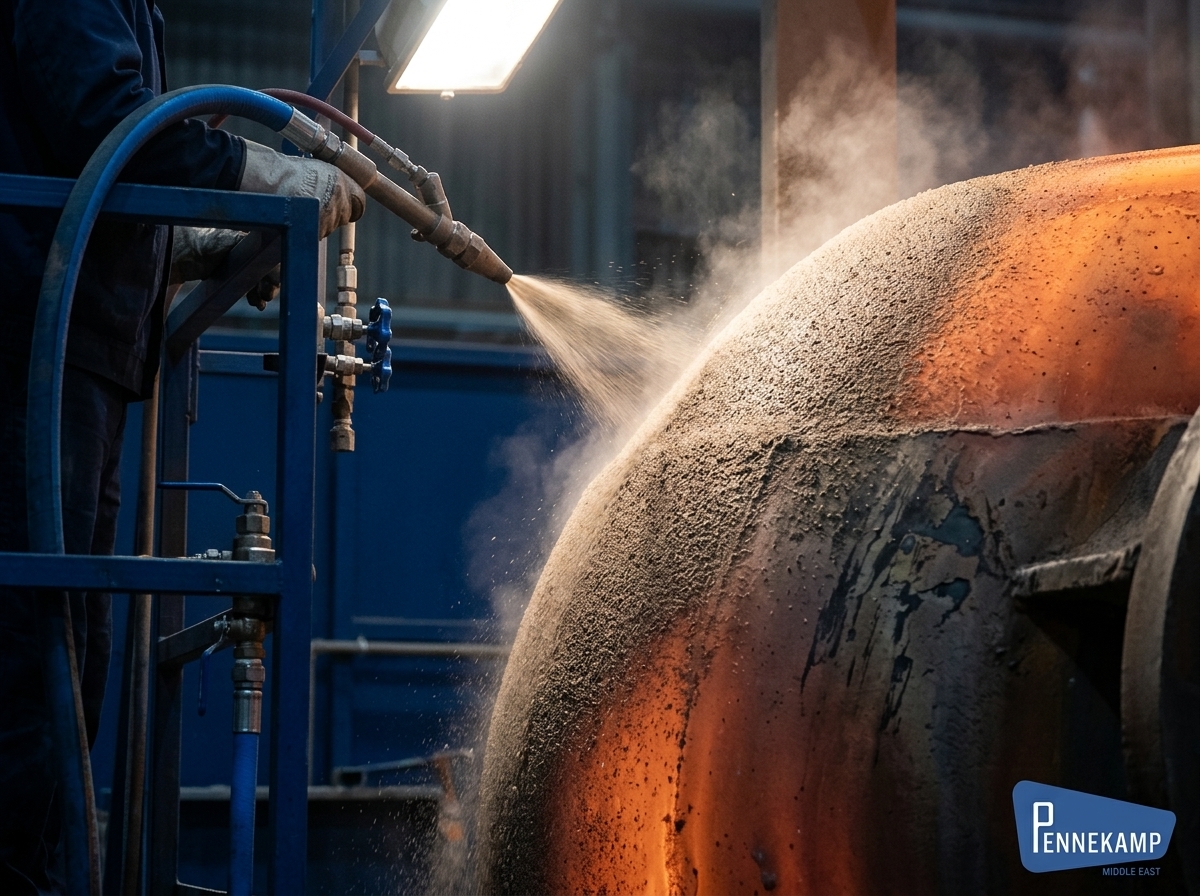
Hot spray repairs allow plants to intervene earlier and more frequently with shorter stops, extending the campaign and reducing emergency events. The value is operational: more stable ladle availability, better safety margins, and fewer disruptions to meltshop logistics.
What a Hot Spray Mix Must Do in Real Service
A hot spray mix must bond to a hot substrate, build thickness with good yield, and resist immediate washout once the ladle returns to service. That requires controlled workability, rapid adhesion development, and chemistry compatible with the ladle environment.
Because these repairs are performed hot, thermal shock tolerance matters. A mix that cracks off after the first cycle is not a repair solution—it is added variability. The best hot spray mixes are engineered to reduce shrinkage stress, maintain cohesion, and create a dense enough layer to resist infiltration.
Application Drivers: Equipment, Surface Condition, and Discipline
Performance depends as much on application as on formulation. Surface preparation is critical: loose material must be removed, and the repair area should be profiled so the mix can mechanically lock in. Spraying parameters—distance, angle, air pressure, and layer thickness control—determine density and adhesion.
Consistency matters. Plants that standardize application windows and operator practices typically see more reliable repair outcomes and better campaign predictability.
Where Hot Spray Mixes Are Most Effective
Hot spray repairs are commonly used at the slag line, lip, and localized erosion zones where thickness loss is predictable. They can also be used to smooth flow paths and reduce turbulence-related attack in certain transfer practices. The goal is not to “coat everything,” but to protect the zones that drive downtime and safety risk.
Zone-targeted repairs also help control consumption: you place material where it returns the most campaign life.
Selection Criteria for Engineering and Procurement
Specify hot spray mixes based on your slag practice, temperature profile, and wear mechanism. Evaluate adhesion behavior in hot conditions, resistance to slag infiltration, thermal cycling stability, and repeatability across batches. Equally important is supplier consistency: variation in water demand, grain sizing, or setting behavior can dramatically change field results.
In the Middle East, packaging integrity and moisture protection are especially important for spray materials. Storage and handling discipline preserve flow and sprayability, reducing on-site variability.
Turning Repairs into Predictable Campaign Management
The strategic value of hot spray mixes is campaign control. When repairs are reliable, the plant can schedule short interventions instead of suffering long shutdowns. Over time, this supports better asset utilization and lowers the true cost of ladle operation.
If your charge ladles suffer frequent slag-line wear, lip spalling, or early profile loss, contact Pennekamp Middle East with your ladle size, cycle frequency, and current repair practice. We’ll recommend hot spray mix solutions and material selections designed to improve adhesion, durability, and predictable charge ladle availability.