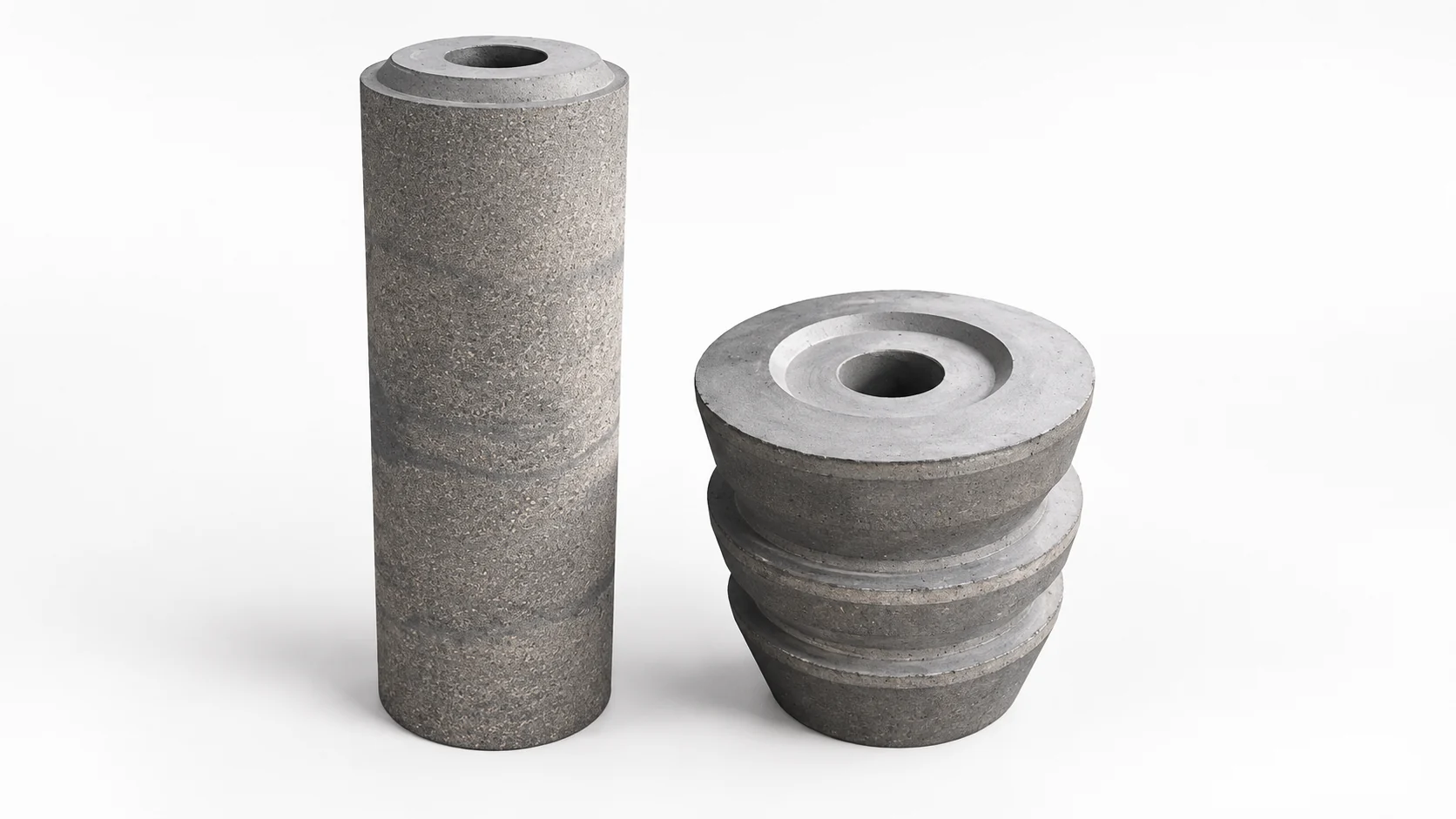
Why Tap-Hole Reliability Matters
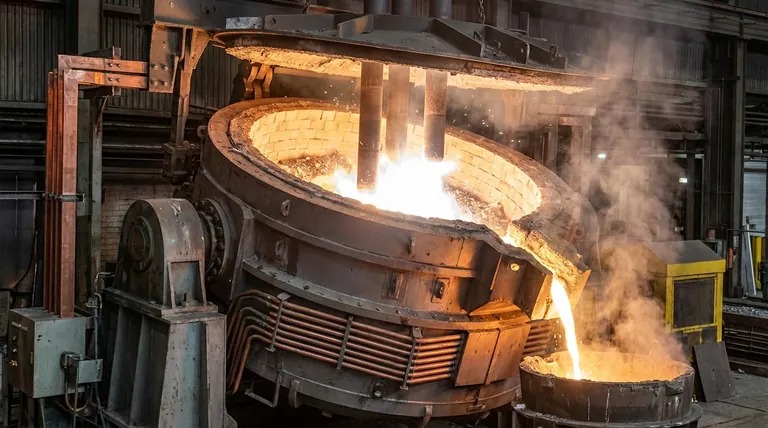
A tap-hole issue can stop production immediately. Unstable tapping increases safety risks and can trigger downstream problems such as slag carryover, poor ladle filling control, and increased wear on related refractories. Even minor delays can disrupt furnace rhythm and increase energy consumption per heat.
Reliable tap-hole blocks are therefore not just refractory components; they are operational control elements that influence safety, productivity, and quality.
Wear Mechanisms at the Tap-Hole
Tap-hole blocks face intense flow erosion during tapping. Steel and slag contact can chemically attack the refractory, while repeated opening and closing cycles introduce thermal shock and mechanical stress. Infiltration and microcracking can accelerate erosion, changing the flow path and making tapping behavior less predictable.
Because this area is exposed to rapid temperature change and mechanical manipulation, thermal shock tolerance and structural integrity are often decisive.
What Good Tap-Hole Blocks Must Deliver
A high-performing tap-hole block maintains dimensional stability and resists erosion so the flow channel remains consistent. Low permeability helps reduce infiltration and slows internal degradation. Strong hot strength helps the block resist deformation under temperature and flow-induced stress.
Equally important is consistency. Tap-hole blocks must perform reliably across heats and across deliveries. Variability in density or microstructure leads to unpredictable tapping behavior—one of the most costly outcomes for an EAF operation.
Installation and Interface Considerations
Tap-hole performance is influenced by installation quality and interface design with surrounding refractory. Alignment, joint quality, and proper seating reduce stress concentration and leakage risk. Heat-up behavior also matters; early-life cracking can compromise performance immediately.
A system view is essential: tap-hole blocks work best when integrated with compatible repair materials and disciplined maintenance routines that preserve geometry and sealing.
Procurement Criteria and Performance Validation
When sourcing tap-hole blocks, evaluate erosion resistance, thermal shock behavior, density and permeability indicators, and proven field references. Demand traceability and consistent batch documentation. Consider supplier support for installation practices and troubleshooting—especially when tapping stability is a high-priority KPI.
In Middle East operations, delivery timing and packaging integrity are part of reliability, because tap-hole components are often needed according to strict maintenance schedules.
If your EAF faces tapping delays, leakage concerns, or rapid tap-hole wear, contact Pennekamp Middle East with your furnace size, tapping practice, and current failure pattern. We can recommend suitable EAF tap-hole block solutions and supporting materials designed for safer, more reliable tapping and stable furnace availability.