The Role of Rheology in the Development of Refractory Castables
Meta Title: Rheology of Refractory Castables | Engineering Overview
Meta Description: Understand how rheological properties dictate the installation flow, strength, and performance of monolithic refractory castables.
Primary Keyword: Refractory castables rheology
Secondary Keywords: monolithic refractory castables, castable raw materials, castables supplier Dubai
Introduction
Monolithic refractory castables rely heavily on precise rheological control during mixing and placement to achieve optimum performance in high-temperature industrial environments. For quality control managers and production engineers, managing the flow characteristics of unshaped refractory formulations is critical. Rheology dictates not only ease of installation—whether by vibration, self-flowing placement, or pumping—but also directly influences particle packing, porosity, and ultimate thermomechanical durability.
Defining Rheology in Refractory Castable Placement
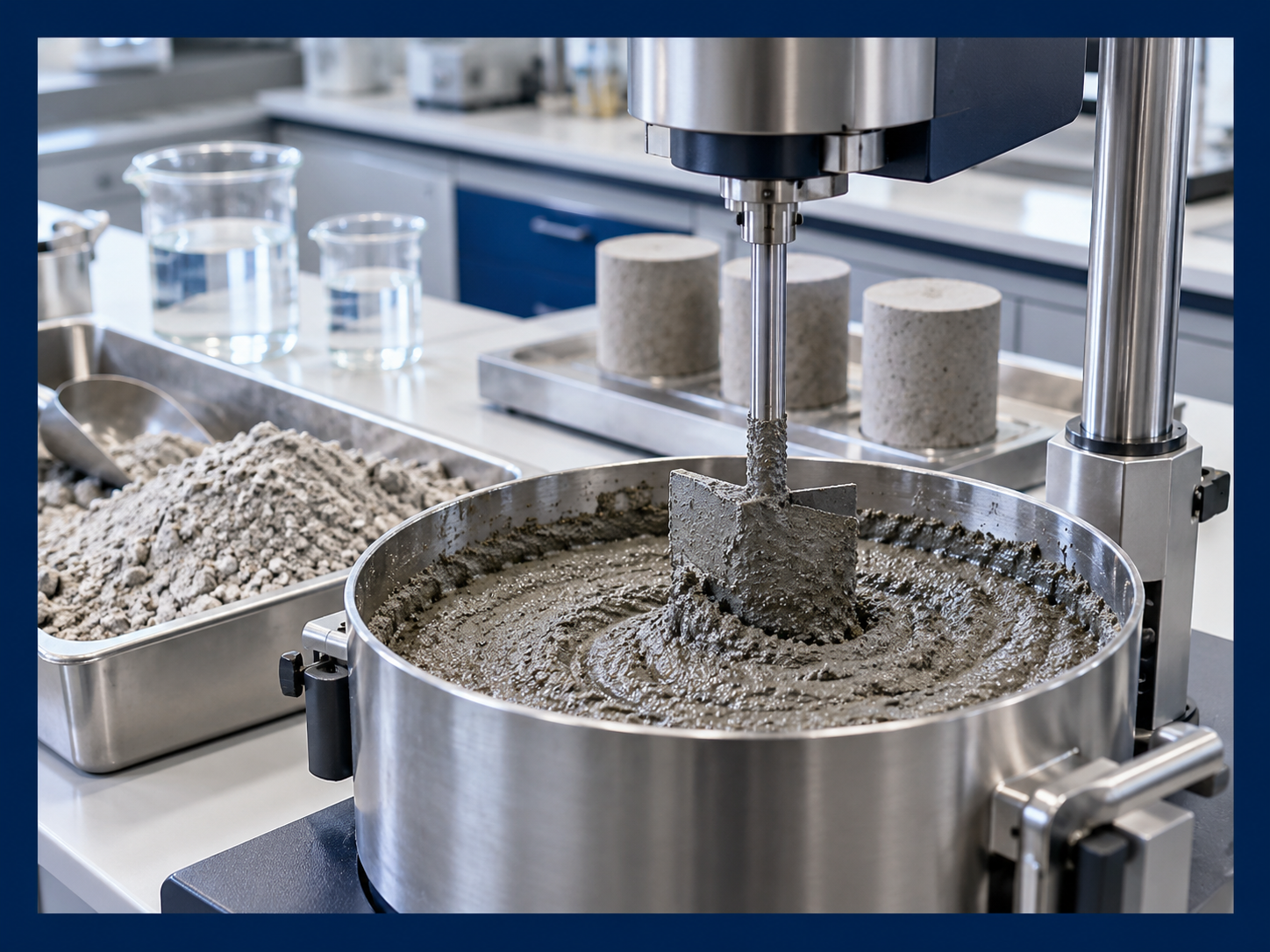
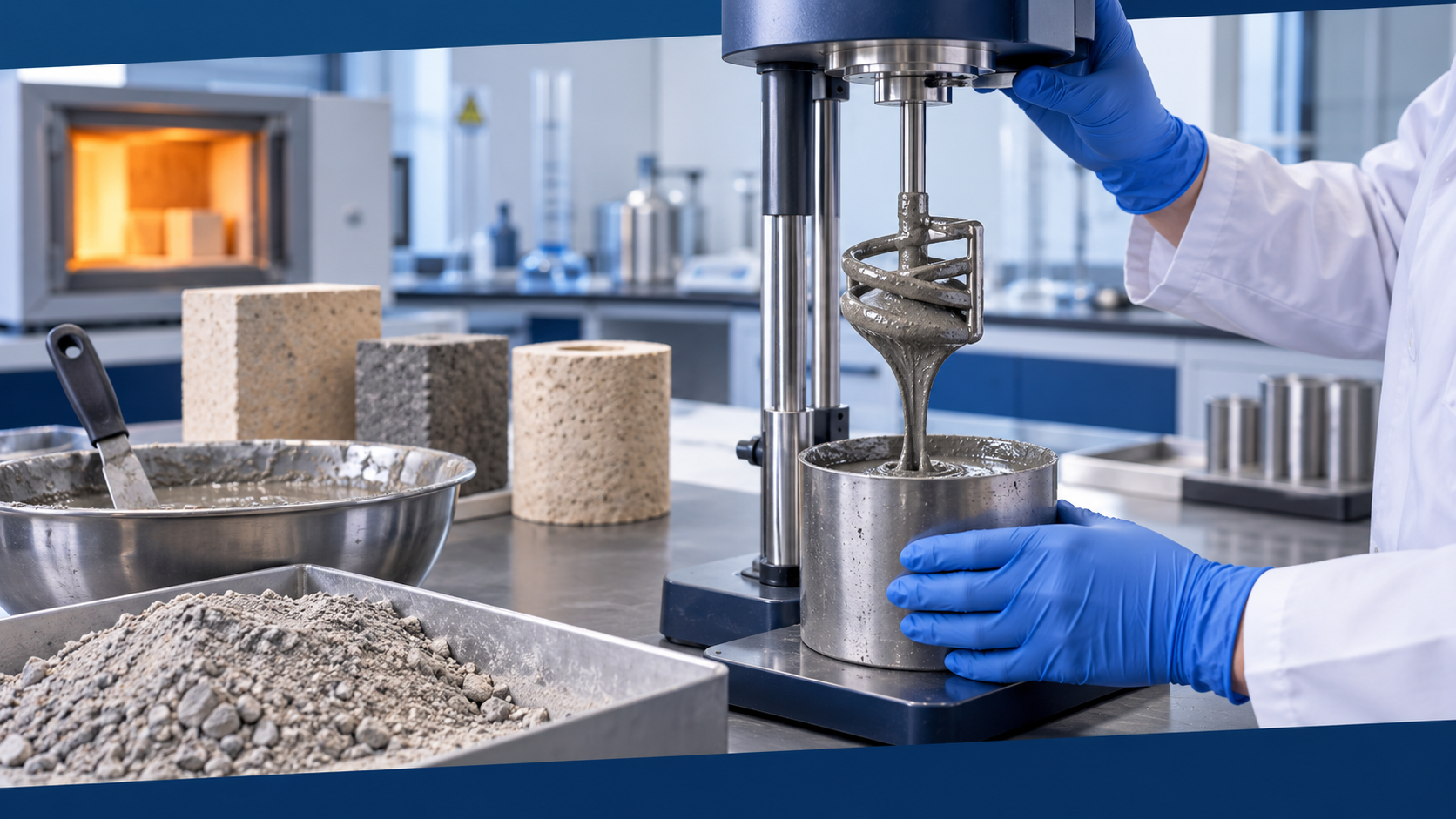
In the context of unshaped refractories, rheology is the study of how fresh castable mixtures flow and deform under applied stresses during mixing, conveying, and placement. Unlike conventional concrete, refractory castables must balance workability with rapid setting times and high thermal resistance.
Key rheological parameters include:
- Yield Stress: The minimum shear force required to initiate movement in the castable mixture.
- Plastic Viscosity: The resistance of the mixture to continuous flow once yield stress is exceeded.
Proper rheological tuning prevents aggregate segregation, minimizes water demand, and ensures that the refractory lining achieves high bulk density upon drying and firing.
Particle Size Distribution and Matrix Additives
The rheological behavior of monolithic refractory castables is governed by particle packing science and chemical matrix additives:
- Grain Size Distribution: Optimizing particle packing fills interstitial voids between larger aggregates with finer particles. High-density packing reduces the total volume of interstitial water needed to achieve flow, resulting in reduced porosity and superior final mechanical strength.
- Matrix Additives and Deflocculants: Ultrafine additives and chemical dispersants modify surface charges on fine particles. Effective deflocculation breaks up particle agglomerates, releasing trapped water and significantly lowering viscosity without increasing water-to-cement ratios.
Impact on Mixing Workability, Pumpability, and Setting Time
Rheological optimization directly impacts jobsite operations and material reliability:
- Pumpability: A low yield stress combined with controlled viscosity allows castable formulations to be pumped over long distances without pipeline blockage or material separation.
- Mixing Workability: Uniform shear distribution during mixing ensures that matrix additives are fully activated, providing stable flow characteristics.
- Setting Time & Strength: Controlled hydration kinetics allow sufficient working time for complex casting geometries before rapid strength development takes place.
Pennekamp Middle East LLC: Technical Solutions for Refractories
Developing high-performance monolithic refractory castables requires engineered raw materials and technical oversight. Headquartered in Dubai, UAE, Pennekamp Middle East LLC serves as a comprehensive global hub for industrial manufacturers and steel plant operators.
Supplying over 100 types of refractory raw materials, finished products, and custom castable solutions, Pennekamp Middle East LLC provides integrated technical, logistics, and financial services to support high-temperature industrial operations.
Conclusion
Understanding and applying rheological principles in monolithic refractory development enables precise control over installation flow, mechanical density, and furnace lining longevity. For specialized material selection and technical assistance, reach out to Pennekamp Middle East LLC’s expert team in Dubai.