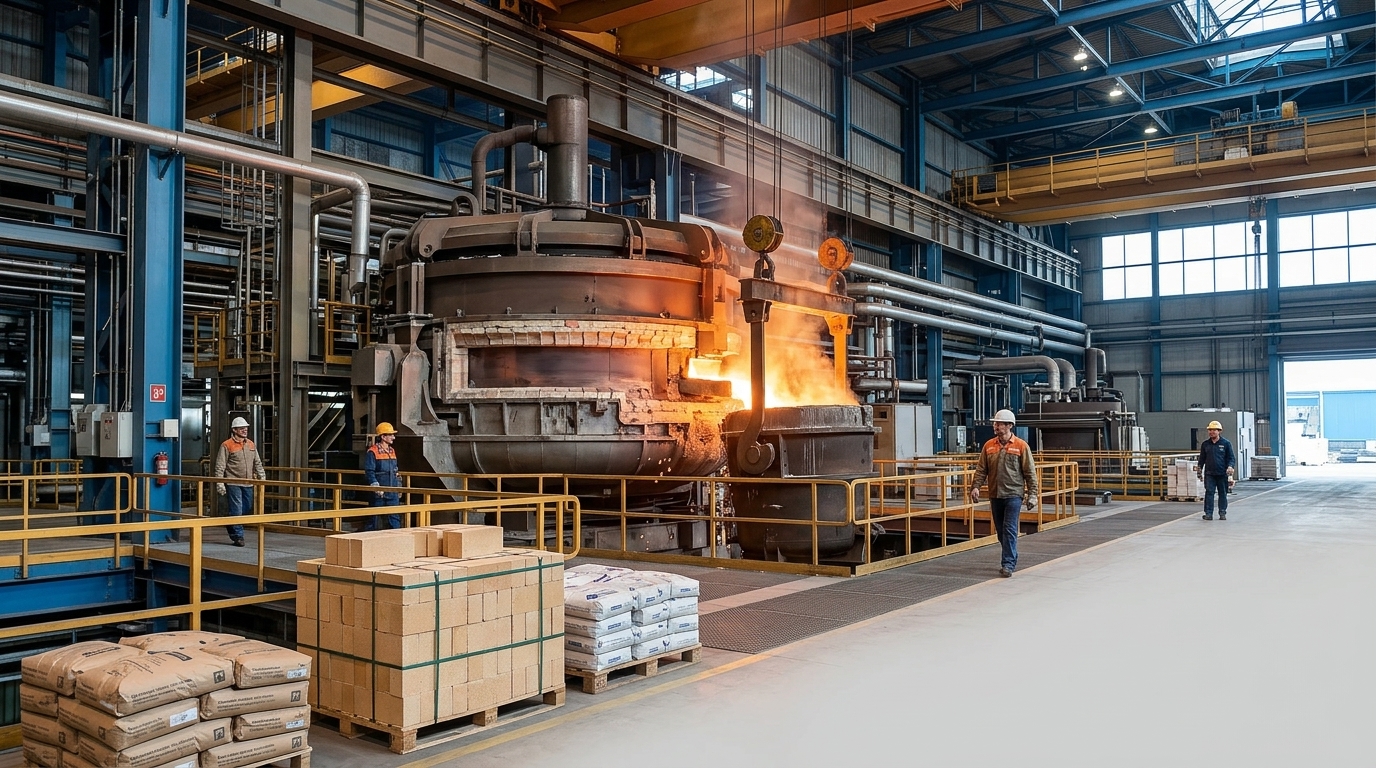
Competitiveness Starts with Availability
In high-temperature industries, availability is a competitive weapon. A plant that runs predictably wins on delivery reliability, unit cost, and customer trust. Refractory failures are one of the most common reasons availability collapses: sudden spalling at the slag line, tap-hole instability, nozzle issues in casting, kiln hot spots, or lining infiltration that forces an unplanned shutdown.
A strong refractory strategy does not aim for “zero wear.” It aims for predictable wear that fits the maintenance plan. Predictability lets production schedule confidently, reduces rush repairs, and protects product quality during the entire campaign.
Energy Efficiency and Thermal Control as Cost Advantage
Heat loss is a direct cost. When refractories are optimized, furnaces and kilns require less energy to maintain the process window. When linings crack and open up, shell temperatures rise, thermal gradients shift, and operators compensate with more fuel or electricity. The result is a creeping cost increase that often goes unnoticed until it becomes material.
Beyond energy, stable thermal profiles support better process control. That translates into less scrap, fewer off-grade batches, and less rework—hidden competitiveness gains that often exceed the value of a minor raw material price reduction.
Product Quality and Contamination Risk
Quality is a market advantage only if it is repeatable. Refractories influence quality through temperature stability, flow stability, and contamination control. In steel, refractory erosion can generate inclusions and disturb slag behavior. In continuous casting, flow-control refractories influence turbulence and re-oxidation risk. In glass and chemical processing, contamination sensitivity is even higher, and refractory chemistry becomes a quality variable.
Competitiveness increases when quality drift decreases. That happens when refractory selection aligns with real operating chemistry and when installation control ensures consistent density and permeability.
Maintenance Economics: Cost per Ton, Not Cost per Brick
Plants often measure refractories by unit price, but competitiveness is driven by total cost of ownership. A lower-priced refractory that shortens campaigns increases shutdown frequency, labor cost, restart energy, and risk events. It can also create cascading costs downstream by destabilizing operations and affecting product quality.
A more competitive approach evaluates refractories by cost per ton of product, not cost per ton of refractory. This naturally prioritizes stable performance, consistent batches, and supplier support—because performance variance is often more expensive than performance average.
Supply Reliability and Technical Support as Competitive Inputs
Even the best lining plan fails if supply is unreliable. Consistent packaging, moisture protection, on-time delivery, and traceable quality are critical. In the Middle East, where maintenance windows are tight and operations are often high-utilization, supply reliability is not a convenience—it is part of competitiveness.
Technical support also matters. Plants benefit when suppliers can interpret wear patterns, propose zone-based upgrades, and support installation discipline. This is how refractory supply becomes a performance partnership rather than a procurement transaction.
Where Competitive Gains Usually Come From
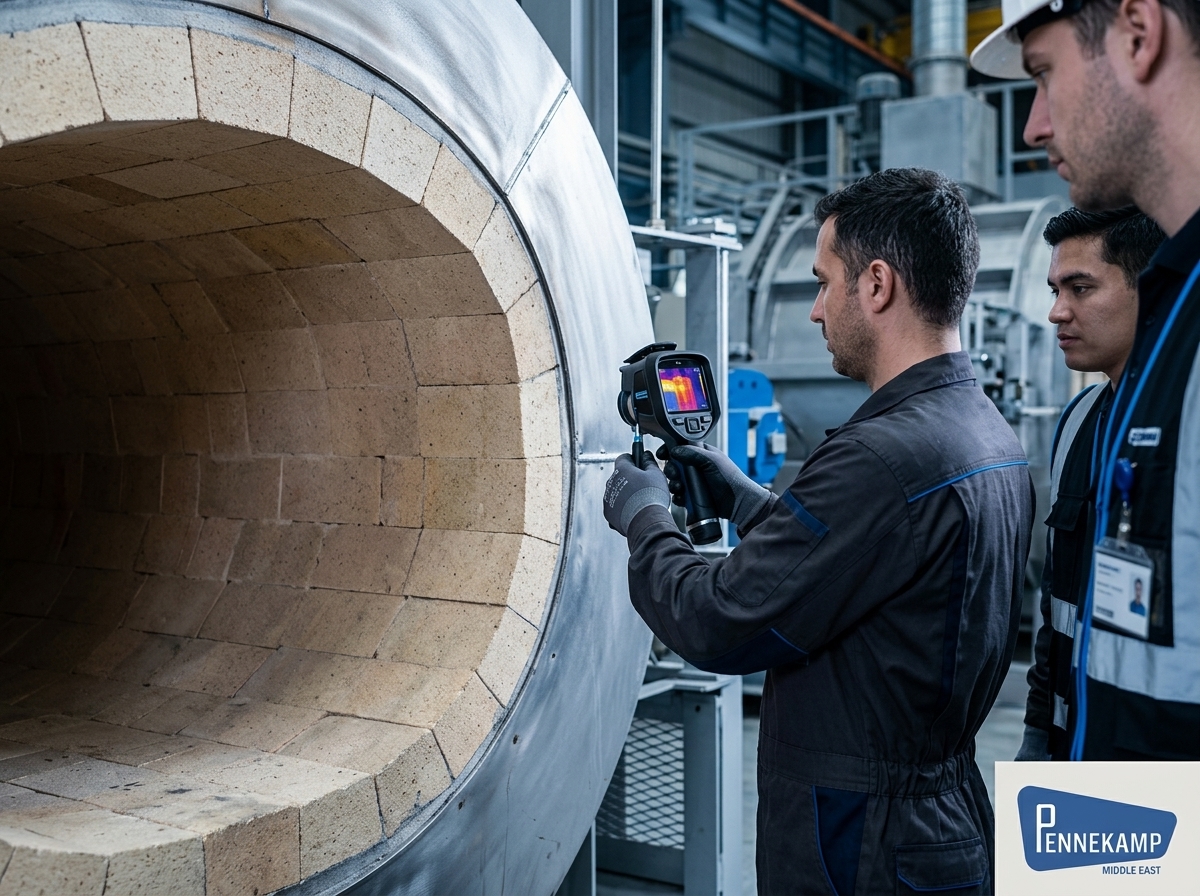
Most plants don’t need “revolutionary” refractories to become more competitive. They need the right materials in the right zones, consistent installation methods, and maintenance routines aligned to predictable wear. Improvements often come from stabilizing slag-line performance, improving tap-hole reliability, reducing hot spots, improving casting stability, and reducing emergency repairs through better repair materials.
If you want to reduce unplanned downtime, stabilize quality, and improve total cost performance through a stronger refractory strategy, contact Pennekamp Middle East with your equipment type, campaign data, and failure pattern. We’ll recommend refractory raw materials and finished products designed to increase predictability, efficiency, and competitive operating performance.