Cooling Is a Microstructure “Finalizer”
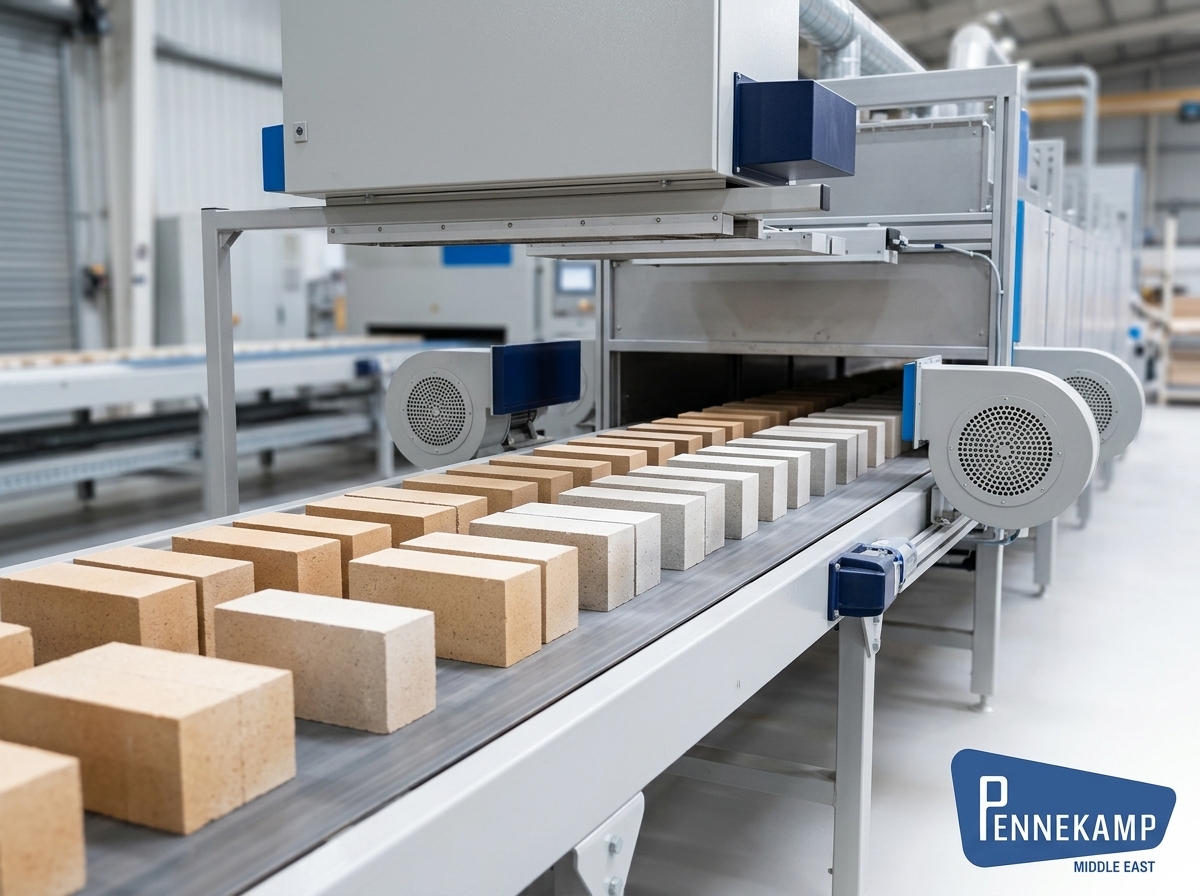
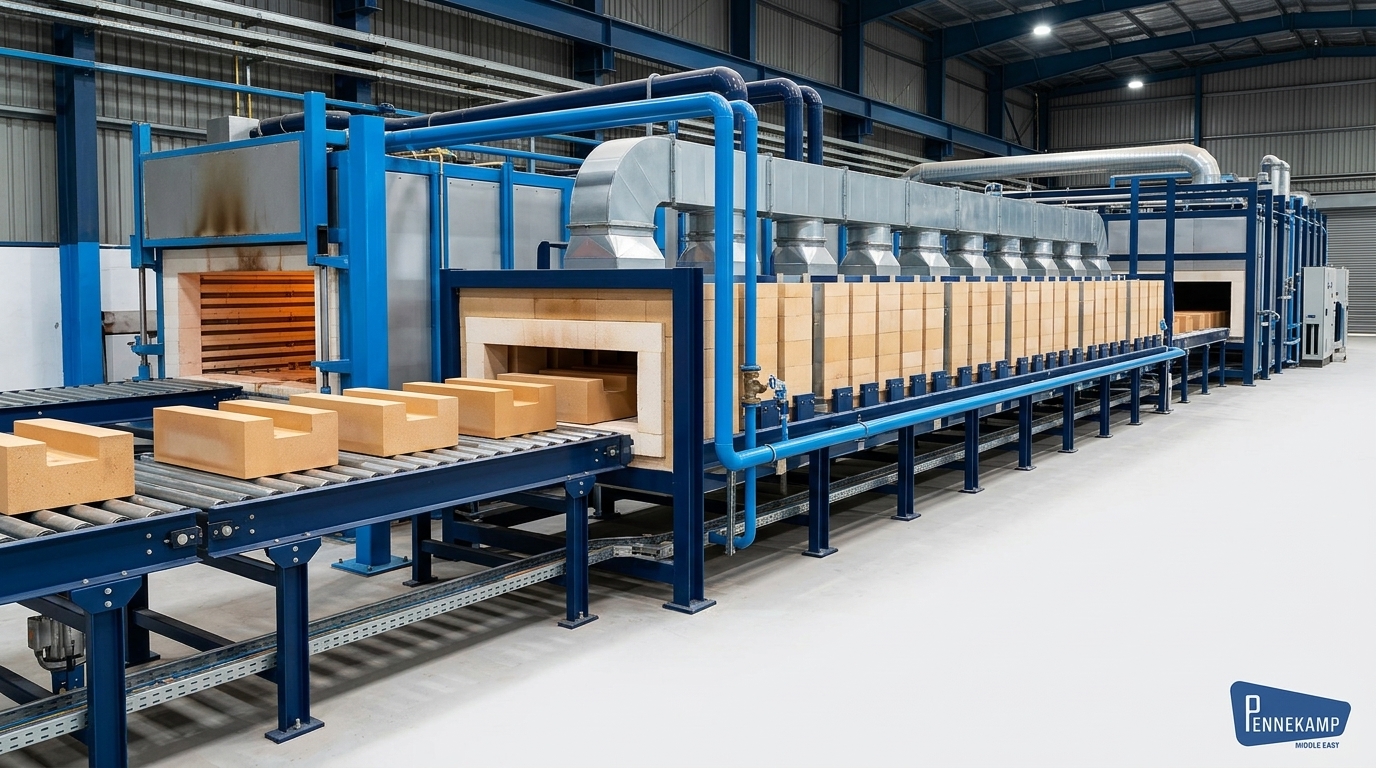
In refractory manufacturing, firing drives sintering and phase development. Cooling determines how those phases lock in and how stress is distributed through the microstructure. If cooling is too fast or uneven, thermal gradients create residual stresses. Those stresses can form microcracks that may not be visible at delivery—but appear as early spalling and accelerated infiltration in service.
Controlled cooling reduces these hidden defects, improving reliability and campaign predictability.
Phase Stability and Controlled Transformation
Many refractory systems contain phases that can transform or reorganize during cooling. Cooling rate can influence crystal size, distribution of secondary phases, and whether unwanted glassy bonds form or remain. Impurities often become more damaging if cooling allows them to segregate into weak boundary phases.
By controlling cooling profiles, manufacturers can reduce the risk of forming low-strength phases at grain boundaries and improve long-term stability at operating temperature.
Thermal Shock Resistance Begins at the Factory
Thermal shock failures often start from microcracks and stress concentrators that exist before installation. Controlled cooling helps limit crack initiation and promotes a more damage-tolerant microstructure. This matters most in applications exposed to rapid cycling: EAF roofs, ladle zones, kilns with frequent start-stop operation, and transfer vessels.
A refractory that survives thermal shock better often does so because its internal stress state and microstructure were managed during manufacturing—not only because of its chemistry.
Dimensional Stability and Fit-Up Reliability
Refractory components must fit. Controlled cooling improves dimensional consistency by reducing warping and internal stress release after delivery. This is especially important for precision products such as slide gate plates, nozzles, and shaped components where tolerance loss creates sealing problems and operational risk.
From a procurement perspective, dimensional stability reduces installation variability and lowers the chance of early-life failure driven by poor fit.
Quality Control and What Buyers Should Look For
Buyers rarely see cooling profiles, but they can detect outcomes: consistent density and strength, low variability between batches, stable performance in thermal cycling, and strong field references in similar duty cycles. Suppliers who control cooling typically show better repeatability—an advantage that translates into predictable maintenance planning.
In addition, controlled cooling supports better traceability in production and more consistent product behavior, which matters in plants that rely on stable performance to optimize operations.
Middle East Value: Reliability Under Tight Windows
In the Middle East, where shutdown windows are short and utilization is high, the cost of “hidden defects” is amplified. Controlled-cooling manufacturing discipline supports fewer surprises in service and more stable campaigns.
If you’re comparing refractory options and seeing inconsistent performance between batches or unexpected early cracking, contact Pennekamp Middle East with your application and failure pattern. We can help align you with refractory raw materials and finished products manufactured with stability-focused process control to support reliable performance in your operating conditions.