Why Nozzle Material Impacts Cleanliness
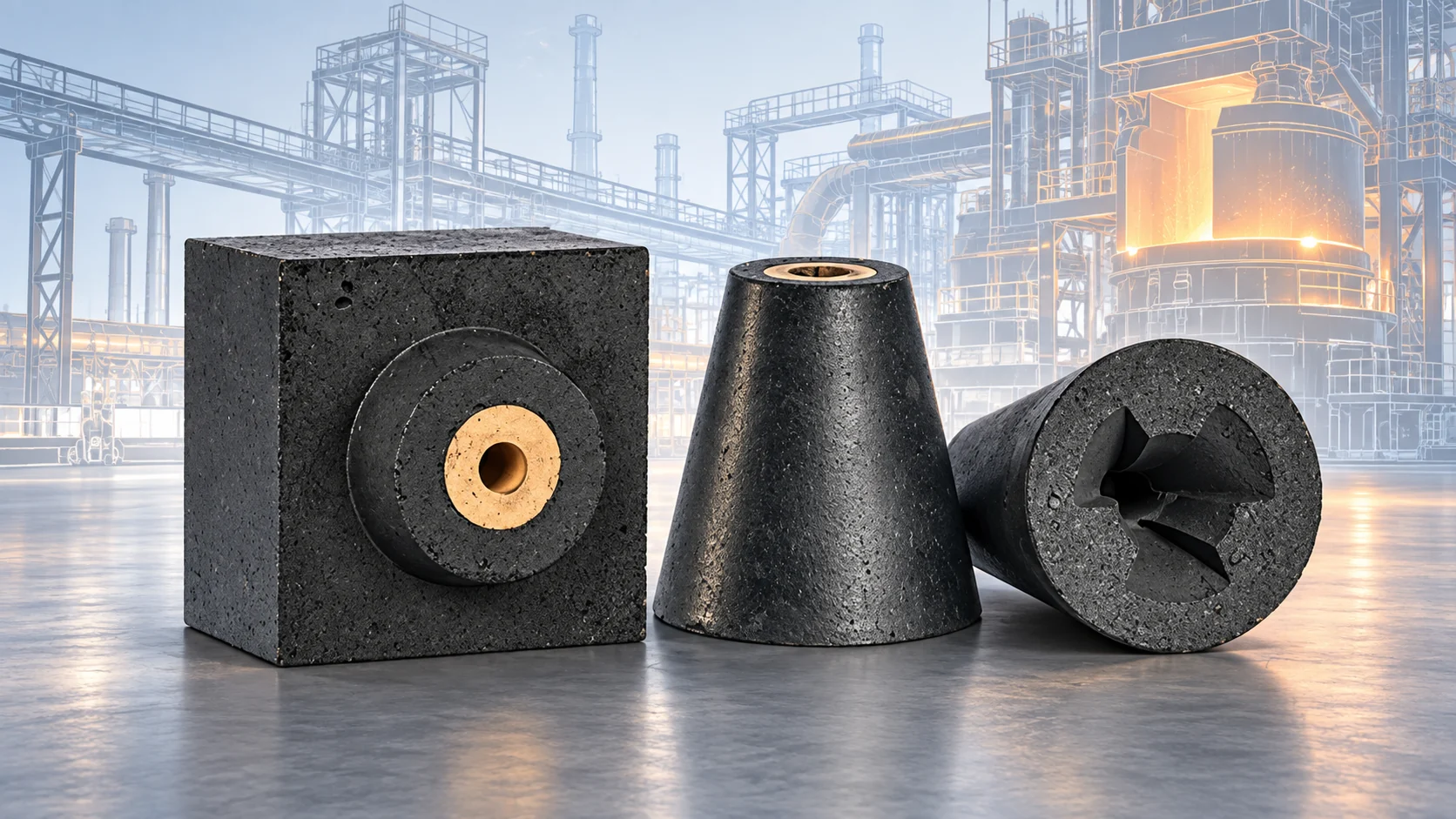
In continuous casting, the tundish nozzle is more than a component—it’s a flow control interface. If the nozzle erodes, reacts, or changes geometry, flow stability shifts. That can increase turbulence, disturb slag layers, and raise re-oxidation risk. It can also influence clogging behavior, which affects casting speed stability and surface quality.
A nozzle that maintains stable geometry and resists chemical attack supports cleaner steel by keeping the system controlled and predictable.
What ZrO₂ Brings to the Table
Zirconia-based refractories are known for high refractoriness and strong corrosion resistance in many aggressive environments. In nozzle applications, ZrO₂ helps resist erosion and chemical wear that can change bore diameter and flow profile. Dimensional stability matters directly: stable geometry supports consistent casting conditions, reducing fluctuations that can trigger defects.
ZrO₂ nozzles are often selected when the casting environment is harsh—high temperature, strong slag exposure risk, demanding sequence length, or stricter quality requirements.
Key Performance Drivers in Service
Nozzle performance is influenced by corrosion resistance, thermal shock tolerance, and resistance to erosion under steel flow. For cleaner casting, the nozzle must also support stable flow without generating disturbances that increase slag entrainment risk.
Manufacturing control is critical. Even small inconsistencies in microstructure can affect wear rate and thermal stability. Quality control typically emphasizes dimensional accuracy, consistent density/porosity behavior, and reliable material integrity across batches.
Cleanliness Outcomes: Stability Over the Sequence
A major cleanliness advantage comes from reduced variability. When the nozzle maintains geometry, the flow regime is more consistent. That supports stable meniscus conditions downstream and reduces operational compensation. It also helps maintain tundish practice consistency—important for inclusion control and surface quality.
In many plants, nozzle stability also contributes to fewer interruptions and fewer emergency changes, reducing exposure time where the steel stream is vulnerable.
Selection Criteria for Engineering and Procurement
When specifying ZrO₂ tundish nozzles, align the grade and design with your casting practice: steel grade sensitivity, casting speed, tundish temperature, and expected sequence length. Demand dimensional tolerances, traceability, and field references in comparable conditions. Consider compatibility with the overall refractory system—stopper/slide gate, SEN interface, and tundish lining practice.
In the Middle East, consistent delivery and packaging protection matter because nozzles are precision components. Handling damage or moisture-related issues can compromise installation integrity and performance reliability.
If your casting operation is facing nozzle erosion, unstable flow behavior, or quality defects linked to flow control, contact Pennekamp Middle East with your caster setup and current nozzle performance issues. We’ll recommend suitable ZrO₂ nozzle options aligned with your cleanliness targets and operational constraints.