Refractory performance is not frozen at installation. Under heat, load, and chemical exposure, refractories undergo phase transformations that change strength, volume stability, and corrosion resistance. Understanding these transformations helps engineers predict lining behavior, select better materials, and avoid failures caused by unexpected expansion, cracking, or property drift.
What Phase Transformations Mean in Refractories
A phase transformation is a change in the mineral structure of a material as temperature, atmosphere, or chemistry changes. In refractories, these transformations can be beneficial ,creating stronger phases ,or harmful ,triggering volume changes, microcracking, or formation of low-melting phases.
Because refractories are used near their thermal limits, phase stability is a core performance variable, not a laboratory curiosity.
Volume Stability and Crack Formation
Some transformations involve expansion or contraction. Even small volume changes at the microstructural level can create internal stresses, especially during thermal cycling. Over time, this can lead to microcracking, higher permeability, and faster infiltration.
Materials engineered for stable high-temperature phases tend to maintain integrity longer, while systems with unstable phase evolution may deteriorate suddenly after a certain temperature threshold is repeatedly crossed.
Strength, Hot Behavior, and Creep
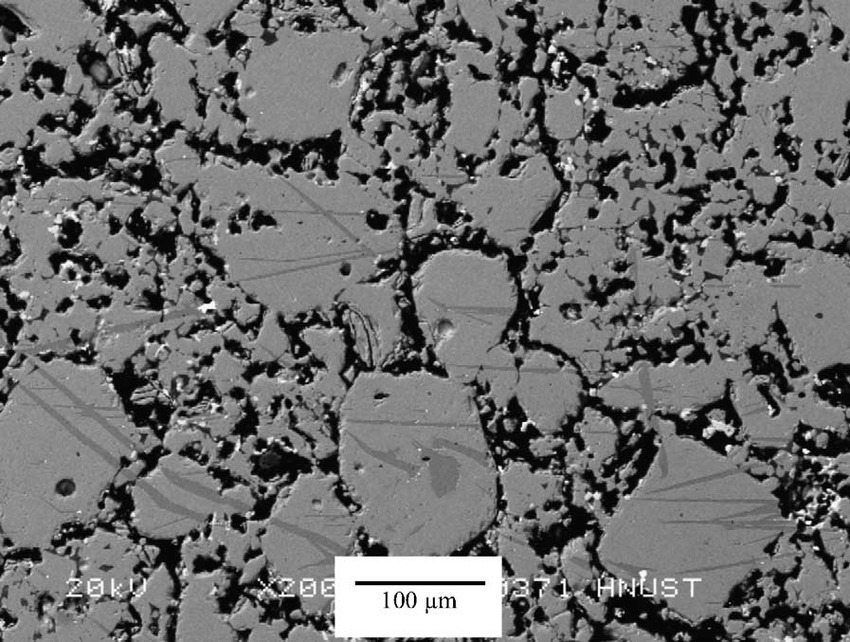
Phase composition influences hot strength and resistance to deformation under load. Stable, high-melting phases generally support better hot strength, while glassy or low-melting bonds can weaken the structure and increase creep. Impurities often influence this, because they can form liquid phases at operating temperatures, accelerating corrosion and deformation.
This is why two refractories with similar “headline chemistry” can behave differently in service ,because their phase evolution and bond behavior differ.
Chemical Environment and Reactive Transformations
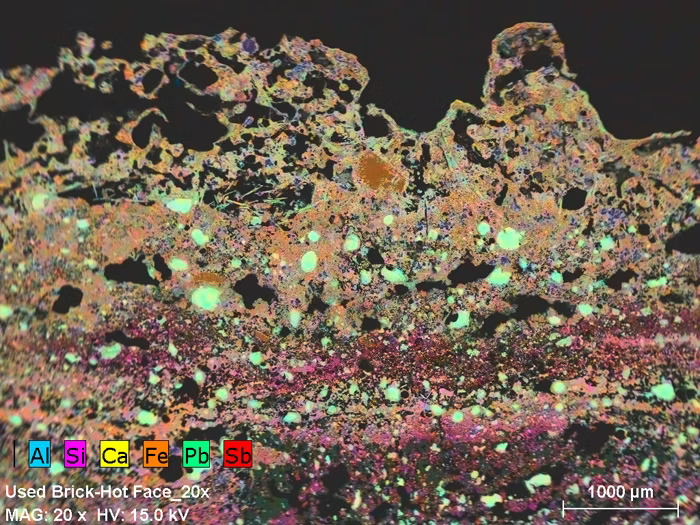
Slags, vapors, and process atmospheres can drive transformations. In steelmaking, basic slags can react with certain phases and alter microstructure. In cement kilns, alkalis and volatiles can trigger new phase formation that changes lining behavior. These reactive transformations can be slow and cumulative, gradually changing permeability and corrosion resistance.
Engineers often see the result as “sudden” failure, but the root cause is long-term phase-driven drift.
Practical Implications for Material Selection
Choosing refractories should include phase stability thinking: what phases are present at operating temperature, and how will they evolve over repeated cycles? High-purity raw materials, controlled firing, and proven formulations reduce the risk of unexpected transformation-driven problems.
If your linings show unusual cracking, swelling, or performance drift over time, contact Pennekamp Middle East with your process temperature profile and slag/atmosphere conditions. We can recommend refractory raw materials and finished products engineered for stable phase behavior and predictable service performance.