The field of refractory engineering has evolved far beyond simple trial-and-error. Today, creating a refractory that can withstand the increasingly demanding conditions of modern industry is a sophisticated science. At the heart of this science are advanced analytical techniques that allow researchers to look deep inside a material’s microstructure, understand its chemical makeup, and precisely determine how and why it fails in service.
This process, often called post-mortem analysis, involves carefully examining a used refractory from a furnace lining. The insights gained are the single most powerful driver of innovation, providing an invaluable feedback loop that allows for the continuous improvement of refractory products.
Key Analytical Techniques and What They Reveal
Researchers use a suite of powerful tools to deconstruct a refractory’s performance, each providing a unique piece of the puzzle.
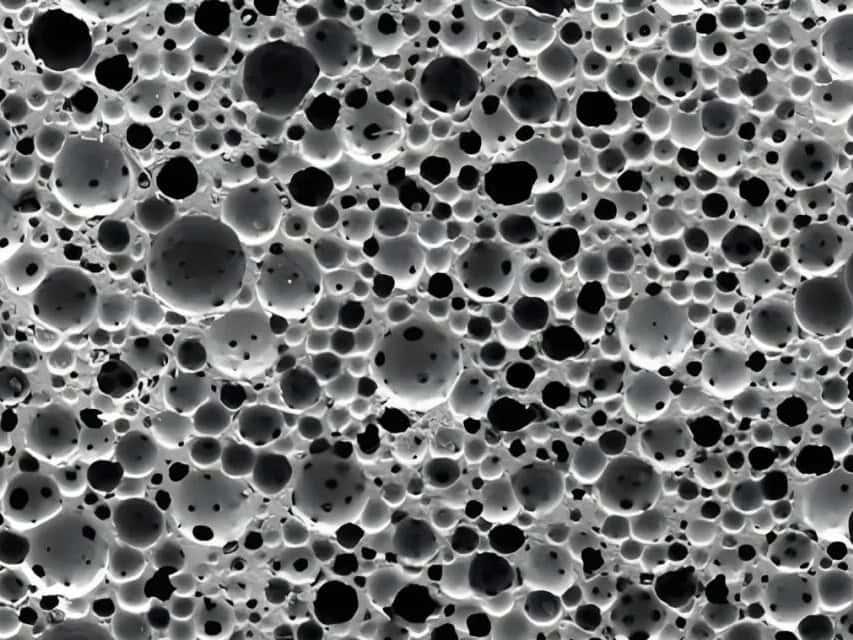
- Scanning Electron Microscopy (SEM): The SEM is a powerful microscope that provides highly magnified images of a refractory’s microstructure. It allows researchers to visually inspect the size, shape, and relationship between the material’s grains, pores, and any cracks that may have formed. This visual evidence is crucial for identifying physical failure modes like thermal shock cracking.
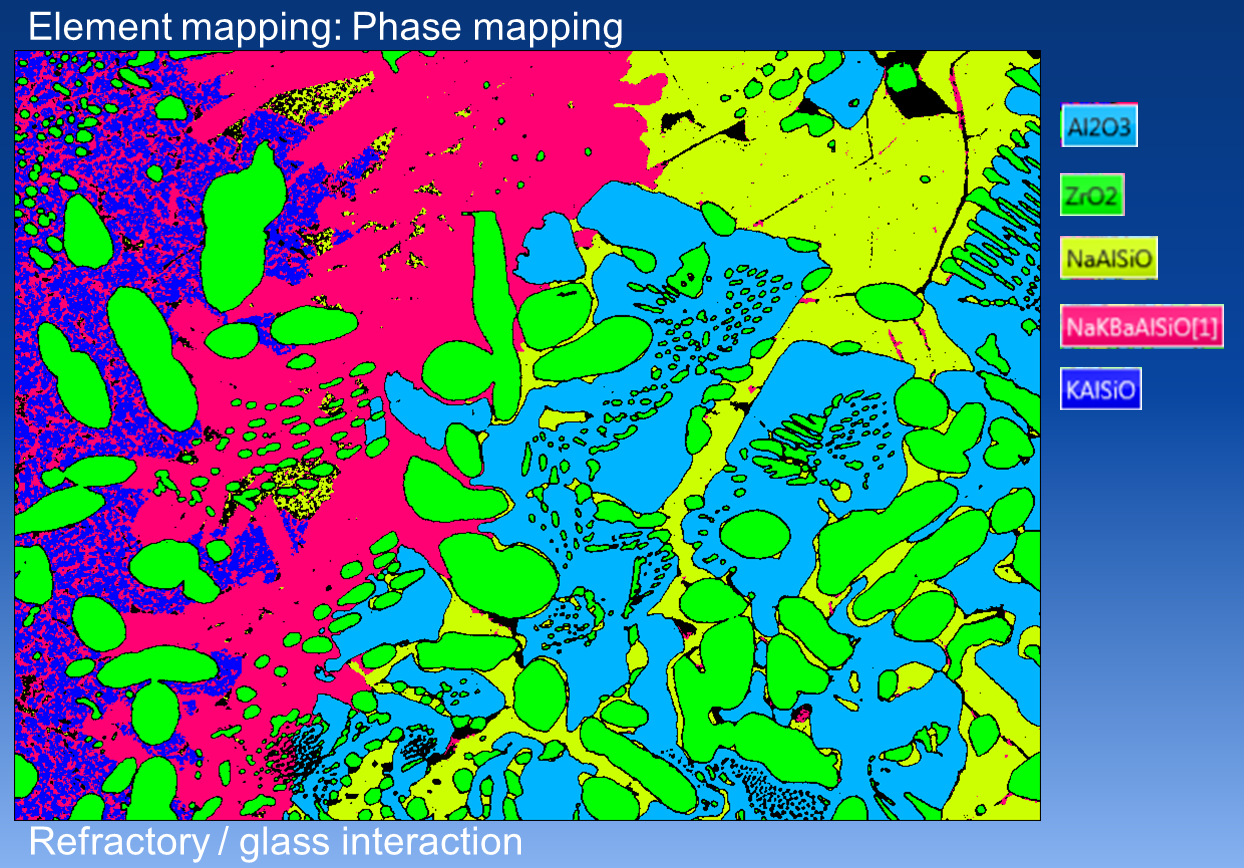
- Energy Dispersive X-ray Spectroscopy (EDS/EDX): Often coupled with an SEM, the EDS system performs a chemical analysis on a microscopic scale. A researcher can aim a beam at a specific point in the microstructure—such as the boundary between a refractory grain and penetrated slag—and get an exact elemental composition of that tiny area. This is how we can definitively trace the infiltration of corrosive elements like sulfur, iron, or alkalis deep into the refractory structure.
- X-Ray Diffraction (XRD): While SEM/EDS tells us what elements are present and where, XRD tells us how those elements are arranged into specific crystalline minerals or “phases.” XRD analysis can identify the original mineral composition of a new refractory and then reveal the new, often weaker, mineral phases that have formed after reaction with slag or process gases. This is critical for understanding the chemical degradation of the material.
How Research Translates to Better Products
The data gathered from these techniques provides a clear roadmap for product improvement.
- If SEM/EDS analysis shows that a specific type of slag is penetrating the grain boundaries, researchers can design a new refractory with a modified chemistry or a denser microstructure to be more resistant.
- If XRD analysis reveals the formation of a low-melting-point phase that weakens the refractory, the raw material formulation can be adjusted to promote the formation of more stable, high-performance phases during firing.
By leveraging these powerful analytical tools, refractory science moves from being reactive to being predictive. It allows for the intelligent design of materials that are precisely engineered to combat the specific failure mechanisms they will face in service, leading to longer campaign lives, improved safety, and greater efficiency.
Leveraging Science for Superior Performance
At Pennekamp Middle East, we are committed to providing refractory solutions that are backed by a deep understanding of materials science. We leverage the insights from advanced analytics to source and supply products that deliver superior performance and unmatched reliability in the most demanding industrial applications.
Contact our experts to learn more about how our scientifically-backed refractory solutions can benefit your operation.