Heat recovery systems only deliver their promised efficiency when high-temperature surfaces remain stable, sealed, and thermally optimized. Refractories play a decisive role by protecting ducts, cyclones, WHRB inlets, and hot-gas channels from abrasion and corrosion while controlling heat losses and preventing air infiltration—two hidden efficiency killers in real industrial operations.
Heat Recovery Efficiency Starts with Thermal Containment
In cement, steel, non-ferrous, and petrochemical facilities, heat recovery is built around capturing usable energy from hot gases. The challenge is that hot-gas paths are rarely clean or gentle: they carry dust, corrosive vapors, and rapid temperature fluctuations. When refractory linings degrade, the system loses efficiency in two ways. First, higher heat loss through degraded insulation forces more fuel input upstream. Second, hot-gas leakage and unwanted air ingress disturb gas temperatures and flow balance, reducing the recoverable energy and lowering overall recovery effectiveness.
Refractories therefore act as the thermal “envelope” that keeps heat where it can be captured and converted.
Protecting High-Wear Hot-Gas Paths
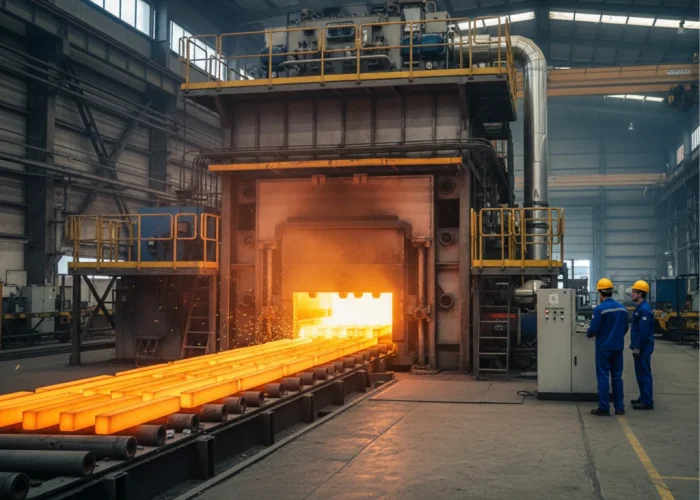
Many heat recovery circuits include high-velocity zones where dust and particulates erode surfaces: kiln inlets, preheater cyclones, ducts, and exchanger throats. Abrasion-resistant refractory castables and engineered lining designs reduce wall thinning and keep cross-sections stable. That matters because flow stability is part of efficiency; changing duct geometry changes pressure drop, gas residence time, and exchanger performance. A lining that holds its profile supports consistent heat exchange and avoids frequent maintenance interruptions.
Preventing Infiltration, Cracking, and Efficiency Drift
Thermal cycling and chemical attack create microcracks and open porosity. Over time, this can lead to infiltration, spalling, and patchwork repairs that introduce uneven thermal conductivity across surfaces. The result is “efficiency drift”: the system still runs, but recoverable heat slowly declines due to rising losses and unstable gas-side conditions.
Selecting refractories with strong thermal shock tolerance—especially in start-stop operations—reduces crack propagation and keeps thermal properties more stable over the campaign.
Managing Corrosive Vapors and Condensables
In some processes, heat recovery sections see alkali vapors, chlorides, sulfates, or other compounds that condense at cooler zones. These condensables can attack certain refractory compositions and rapidly increase porosity and wear. Zone-based refractory selection is essential: hot-face materials suited to chemical exposure, plus backup layers engineered to maintain insulation performance without absorbing condensates.
In real plants, the “right” refractory is the one that keeps heat recovery stable in the specific gas chemistry your operation produces.
Installation Quality and Sealing: The Practical Advantage
Even the best refractory design loses value if joints leak or installation quality is inconsistent. Air infiltration is a major hidden energy penalty in recovery circuits. A properly installed lining—correct anchoring, controlled expansion, and disciplined curing and dry-out—helps maintain sealing integrity. The payoff is measurable: steadier outlet gas temperatures, more reliable exchanger behavior, and fewer emergency shutdowns.
Middle East Relevance: Energy Efficiency and Reliability
In the Middle East, heat recovery projects are often tied to energy-efficiency targets and operational reliability. Refractories that reduce heat loss and stabilize campaigns support both. Equally important is supply reliability and packaging integrity, because recovery-system maintenance is typically scheduled around narrow shutdown windows.
If you are seeing rising heat loss, frequent refractory repairs in ducts or cyclones, or unstable heat recovery performance, contact Pennekamp Middle East with your system layout, gas temperature range, and wear pattern. We can recommend refractory raw materials and finished products engineered to protect hot-gas paths, reduce leakage, and sustain heat recovery efficiency over longer campaigns.