For centuries, the science of refractory materials has focused on macroscopic properties—improving strength and heat resistance through better raw materials and firing techniques. Today, the frontier of innovation has moved to an entirely new scale: the nanoscale. By manipulating materials at the level of billionths of a meter, nanotechnology is providing engineers with powerful new tools to fundamentally enhance the performance of refractory products, making them stronger, more durable, and more reliable than ever before.
The core concept behind nanotechnology in refractories is the optimization of the material’s finest component—the matrix. The matrix is the fine-grained “glue” that bonds the larger refractory aggregates together. By perfecting this matrix using nanoparticles, the performance of the entire refractory body can be dramatically improved.
How Nanoparticles Engineer Superior Performance
The incorporation of precisely engineered nanoparticles—such as nano-silica, nano-alumina, or even carbon nanotubes—into a refractory mix has several profound effects.
- Improved Densification and Sintering: Nanoparticles are so small that they can fill the microscopic voids between larger raw material grains. This creates an extremely dense particle packing before the material is even fired. This “super-packed” green body requires less heat and time to sinter into a strong, dense final product, often resulting in energy savings during manufacturing and leading to a refractory with significantly lower porosity.
- Enhanced Mechanical Strength: The ultra-dense and homogenous matrix created by nanoparticles results in a significant increase in the material’s mechanical strength, both at room temperature (Cold Crushing Strength) and, more importantly, at high operating temperatures (Hot Modulus of Rupture).
- Superior Thermal Shock Resistance: The addition of certain nanomaterials, like carbon nanotubes (CNTs) or silicon carbide (SiC) whiskers, can introduce a crack-arresting mechanism into the refractory. These tiny, high-strength fibers act as microscopic rebar, deflecting the path of propagating cracks and absorbing their energy, which drastically improves the material’s ability to withstand the stresses of thermal shock.
- Increased Corrosion Resistance: Perhaps the most significant benefit is improved corrosion resistance. The extremely low porosity of a nanostructured refractory presents far fewer pathways for corrosive liquid slag or process gases to penetrate, effectively shielding the material from chemical attack.
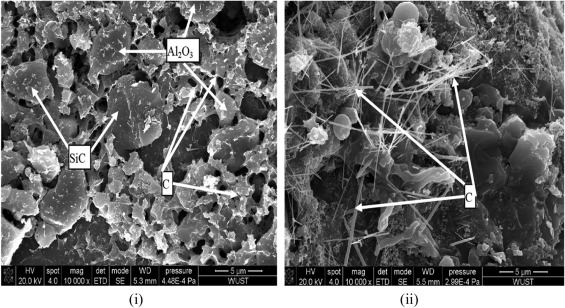
Nanotechnology is no longer a futuristic concept in the world of refractories. It is an active and exciting field of material science that is already delivering a new class of high-performance materials designed to meet the ever-increasing demands of modern industry.
Leveraging Cutting-Edge Science for Your Application
At Pennekamp Middle East, we are committed to staying at the forefront of refractory technology. We understand the science behind advanced materials and provide our clients with access to innovative solutions that deliver tangible performance benefits.
Contact our material experts to learn more about how advanced refractory technologies can improve the performance and reliability of your high-temperature process.